


Wholesale used vehicle values have maintained historically elevated levels through mid-2026, defying expectations of a major market correction. The Manheim Used Vehicle Value Index recently recorded readings around 212, which represents a 2% to 4% increase compared to the previous year. This sustained market strength directly impacts what local vehicle owners can secure for their current cars. For those navigating the daily commute along the Broadway Extension or managing family schedules in Edmond, these market dynamics mean a personal vehicle is likely worth more today than traditional depreciation curves would suggest.
Retail prices reflect this wholesale strength, with the average used vehicle listing price hovering around $27,000. Late-model pre-owned vehicles, particularly those three years old or newer, are commanding an average of nearly $30,500. This represents a year-over-year increase of roughly 3% to 6%. At Sell Your Car to Cooper, our team closely monitors these shifting valuations to ensure we provide competitive, real-time offers. Sellers looking to capitalize on this high-value window can visit our appraisal center or give our team a quick call to discuss their vehicle's current market worth.
With used vehicle supply remaining exceptionally tight across the region, dealerships are actively bidding for clean, well-maintained inventory. The overall industry supply sits at a lean 45 to 47 days, while highly sought-after vehicles priced under $15,000 are facing a critical shortage of just 27 to 33 days. This supply-and-demand imbalance puts sellers in an advantageous position to negotiate top-tier values for their trades or outright sales.
Table of Contents
- What Is Driving Today's Elevated Pre-Owned Vehicle Market
- Key Specifications and Features That Maximize Your Vehicle's Resale Value
- Which Vehicle Brands and Segments Hold Their Value Best
- Comparing Your Selling Options: Dealership Trade-In vs. Private Party Sales
- Critical Mileage Thresholds and Pricing Strategies to Protect Your Return
- Common Questions About Selling Your Car to Cooper
- Maximizing Your Return with Sell Your Car to Cooper
- What Is Driving Today's Elevated Pre-Owned Vehicle Market
- Key Specifications and Features That Maximize Your Vehicle's Resale Value
- Which Vehicle Brands and Segments Hold Their Value Best
- Comparing Your Selling Options: Dealership Trade-In vs. Private Party Sales
- Critical Mileage Thresholds and Pricing Strategies to Protect Your Return
- Common Questions About Selling Your Car to Cooper
- Maximizing Your Return with Sell Your Car to Cooper
What Is Driving Today's Elevated Pre-Owned Vehicle Market

The current strength of the pre-owned vehicle market is the result of several compounding economic factors that began with global production disruptions several years ago. When manufacturers faced severe supply chain constraints, new-vehicle production slowed dramatically, creating a multi-year deficit of late-model used cars entering the secondary market. This inventory gap cannot be easily or quickly resolved, meaning the shortage of high-quality, three-to-five-year-old vehicles will persist for years.
At the same time, the rising cost of new vehicles has redirected a significant portion of buyers toward the pre-owned segment. With the average new car transaction price hovering near $49,758, many shoppers find that pre-owned models offer a more practical financial path. This influx of buyers has kept demand for used inventory robust, supporting high resale values. Cox Automotive projections indicate that total used-vehicle sales will reach approximately 38 million units this year, with retail used sales making up about 20 million of that total.
Furthermore, macro-level market factors continue to support these elevated valuations. Black Book’s Used Vehicle Retention Index recently ticked up to 147, showing that wholesale values are holding firm rather than depreciating along historically normal paths. The combination of limited supply and steady buyer demand ensures that clean pre-owned vehicles remain highly prized assets on dealership lots.
Key Specifications and Features That Maximize Your Vehicle's Resale Value

Certain equipment packages and factory options exert a disproportionate influence on a vehicle's final appraisal value. In the pre-owned marketplace, premium cabin amenities and advanced driver-assist systems consistently return a higher portion of their initial cost. For instance, vehicles equipped with a panoramic sunroof typically command a premium of $500 to $1,000 over identical models without this feature, depending on the vehicle segment.
Interior materials also play a major role in attracting secondary buyers and protecting residual value. Specifying leather seats generally boosts a used vehicle's resale price by $400 to $800 while significantly reducing the time the vehicle spends on the market. Advanced safety packages, such as blind-spot monitoring and adaptive cruise control, have transitioned from luxury novelties to highly sought-after necessities that appraisers actively look for during physical inspections.
Additionally, powertrain choices and fuel efficiency are driving significant value shifts. Elevated fuel costs have bolstered demand for hybrid powertrains and highly efficient commuter options. Industry data shows that used electric vehicle valuations have stabilized, with some EV indexes rising 8% to 12% year-over-year. While enthusiast models benefit from a manual transmission, mainstream passenger cars equipped with a smooth eight-speed automatic transmission or a continuously variable transmission retain broader market appeal and higher baseline values.
Which Vehicle Brands and Segments Hold Their Value Best
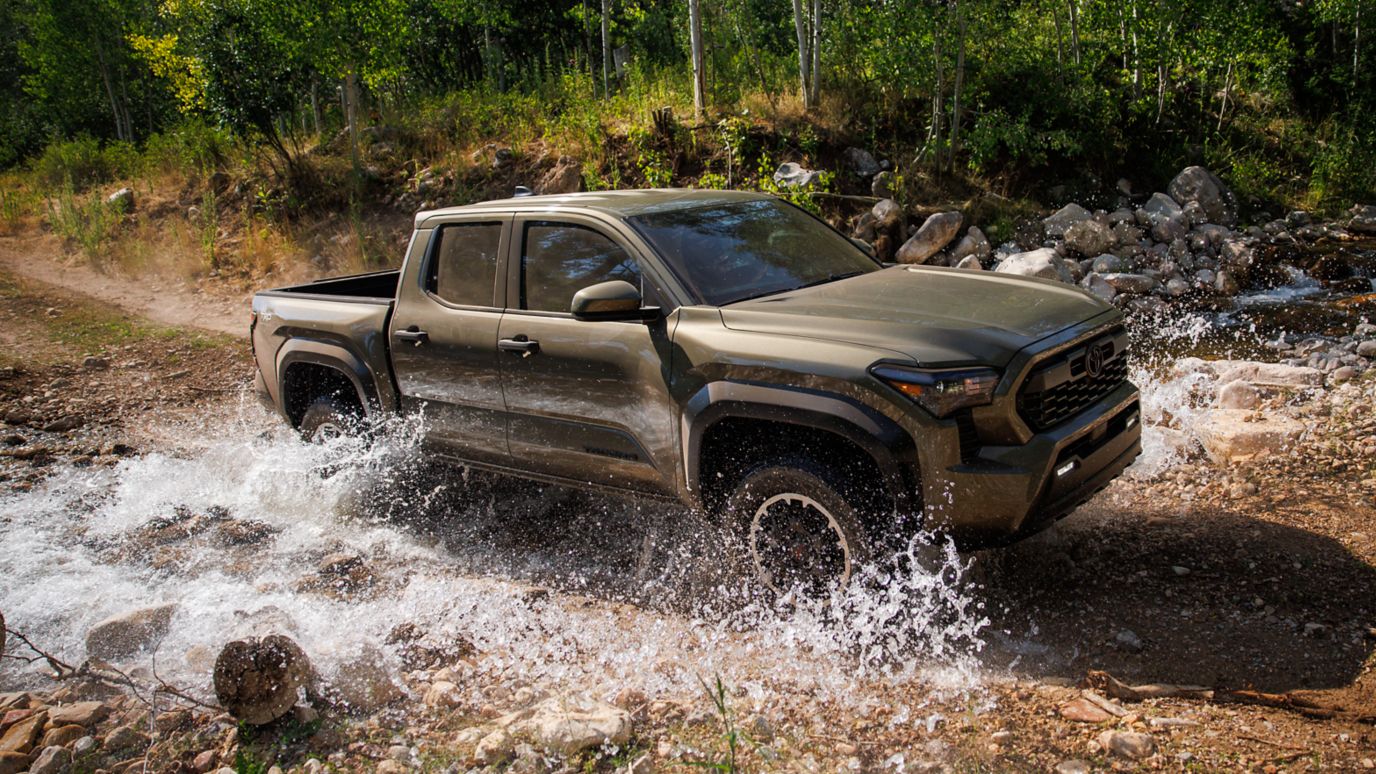
Depreciation rates vary significantly across different manufacturers and vehicle segments, making brand reputation a primary driver of long-term residual value. The Kelley Blue Book Best Resale Value Awards highlight manufacturers that consistently outpace the industry average. Toyota has secured the Best Brand title multiple times, driven by the exceptional value retention of models like the Toyota Tacoma, which boasts a projected five-year resale value of roughly 63% of its original MSRP.
Similarly, Lexus frequently dominates the luxury division, demonstrating that premium engineering and proven reliability minimize depreciation. In terms of vehicle segments, midsize trucks and off-road SUVs retain the highest percentage of their original sticker prices. The Ford Bronco leads off-road segments with an impressive 67% five-year resale value, while full-size trucks like the Toyota Tundra maintain a robust 60% retention rate.
Conversely, large luxury sedans and mass-market electric vehicles historically experience steeper depreciation curves. While the average new vehicle retains roughly 42% of its value after 60 months, top-performing trucks, hybrids, and compact crossovers return closer to 59% of their original purchase price. Choosing a vehicle from a high-retention brand serves as an effective shield against rapid depreciation, ensuring a stronger financial position when it comes time to trade or sell.
Comparing Your Selling Options: Dealership Trade-In vs. Private Party Sales

Selling a used vehicle requires balancing the desire for maximum financial return against the value of time, convenience, and transaction security. A private party sale can sometimes yield a higher gross transaction price, but it demands significant personal investment. Sellers must manage online listings, filter through unserious inquiries, arrange meetings with strangers, and navigate complex payment verification processes to avoid potential fraud.
In contrast, selling directly to a dealership offers a streamlined, immediate transaction that can be completed in a single visit. Dealerships handle all of the administrative paperwork, including title transfers, loan payoffs, and registration filings. This professional process eliminates the liability and safety concerns associated with meeting private buyers. Furthermore, trading a vehicle in toward a replacement purchase unlocks valuable tax advantages in many states, where the trade-in value is deducted from the taxable purchase price of the new vehicle.
For example, Oklahoma applies two distinct vehicle taxes: a 3.25% motor vehicle excise tax and a 1.25% state sales tax, plus local municipal and county rates. While the excise tax applies to the full purchase price, your trade-in directly reduces the taxable base for the state and local sales taxes. If you trade in a vehicle valued at $15,000, and your combined state and local sales tax rate is roughly 5.5%, you shield that $15,000 from those taxes—generating an immediate $825 tax savings. This effectively raises the realized value of the dealer's offer to $15,825, closing the gap with potential private party pricing. At Sell Your Car to Cooper, we provide transparent, market-reflective cash offers that allow sellers to walk away with a check or seamlessly transition into their next vehicle without the stress of private listings.
Critical Mileage Thresholds and Pricing Strategies to Protect Your Return

Odometer milestones act as psychological and algorithmic barriers that can trigger sudden drops in a vehicle's appraised value. Automated valuation systems and dealership inventory algorithms group vehicles into specific mileage tiers, which means a car with 59,900 miles is categorized differently than one with 60,100 miles. When our team walks sellers through our appraisal process, we often point out that crossing the 60,000-mile mark shifts how digital pricing systems categorize a vehicle, often shaving hundreds of dollars off an offer instantly.
Key thresholds to watch include 50,000 miles, 75,000 miles, and the highly critical 100,000-mile mark. Selling a vehicle just before it crosses one of these boundaries preserves its appeal to both dealership buyers and retail shoppers who rely on search filters. If a vehicle is nearing one of these limits, minimizing unnecessary driving prior to obtaining an appraisal is a smart way to protect its market value.
To establish a successful selling strategy, owners should define a clear pricing spectrum rather than focusing on a single, rigid number. This involves identifying an ideal private-sale target, a fair market value for a dealer transaction, and a minimum acceptable floor price. Having these parameters established beforehand provides the flexibility needed to respond to offers confidently and secure a successful transaction.
Common Questions About Selling Your Car to Cooper

Can I sell my car if I still owe money on the auto loan?
Yes, selling or trading in a vehicle that is not fully paid off is a standard transaction. Our team will contact the lender directly to obtain the official payoff amount and handle all the necessary paperwork. If the vehicle is worth more than the remaining balance, we will issue a check for the difference. Conversely, should you have negative equity, our team can assist in navigating options to settle or roll over the outstanding balance.
What documentation do I need to bring to complete the sale?
To ensure a quick and seamless transaction, sellers should bring the vehicle's title or current payoff information, a valid state-issued photo identification, and all sets of keys. Bringing along complete maintenance records and the original owner's manual can also help verify the vehicle's history and support a higher offer. Once we verify these items, we can typically finalize the sale and issue payment on the same day.
How long is a dealership appraisal offer valid?
Our professional appraisal offers are typically valid for 10 days or a specific mileage limit, giving sellers time to consider options without pressure. This window protects against sudden market fluctuations while allowing owners to shop around or finalize plans. Should you choose to accept the offer within that window, we guarantee the price, provided the vehicle's condition is maintained.
Does a history of minor cosmetic damage heavily impact my offer?
Minor wear such as light scratches, small paint chips, or superficial scuffs on the wheels is expected on pre-owned vehicles and has a minimal impact on the overall valuation. However, major structural issues, active warning lights, or heavily stained interiors will require reconditioning and will adjust the offer downward. Taking a moment to detail your car inside and out is a simple, effective way to ensure it looks its best when you bring it in.
Will aftermarket modifications increase my vehicle's trade-in value?
In most cases, highly personalized aftermarket modifications like custom paint, body kits, or non-standard exhaust systems do not add value and can actually lower a vehicle's appraisal. Dealerships and secondary buyers generally prefer vehicles in their original factory configuration because they appeal to the widest audience. If an owner has kept the original factory parts, returning the vehicle to its stock setup before selling is usually the best path to maximize the return.
Maximizing Your Return with Sell Your Car to Cooper

Navigating today's highly competitive used car market does not have to be a complicated or stressful experience. With pre-owned vehicle values remaining near historic highs, acting quickly is the most reliable way to secure a premium return on your automotive investment before market conditions shift. Our professional team is committed to providing a transparent, hassle-free appraisal process that respects your time and delivers the real-world value your vehicle deserves.
Sellers looking to cash out on an extra family vehicle or upgrade a daily drive can easily transition with our support. To get started on securing a competitive cash offer, stop by our physical location at 14349 N Kelley Ave, Edmond, OK 73013 today. Calling (405) 242-6142 connects directly with an appraisal specialist who can walk through the next steps.
Disclaimer: Market data, vehicle valuation trends, and tax savings examples in this article are provided for general informational purposes only and do not constitute formal financial, tax, or binding appraisal commitments. Actual trade-in values are determined upon physical vehicle inspection, and tax savings may vary based on your specific municipality and local tax rates. Please consult with a qualified tax professional or speak directly with our appraisal team for specific calculations.
© 2026 Sell Your Car to Cooper. All rights reserved.